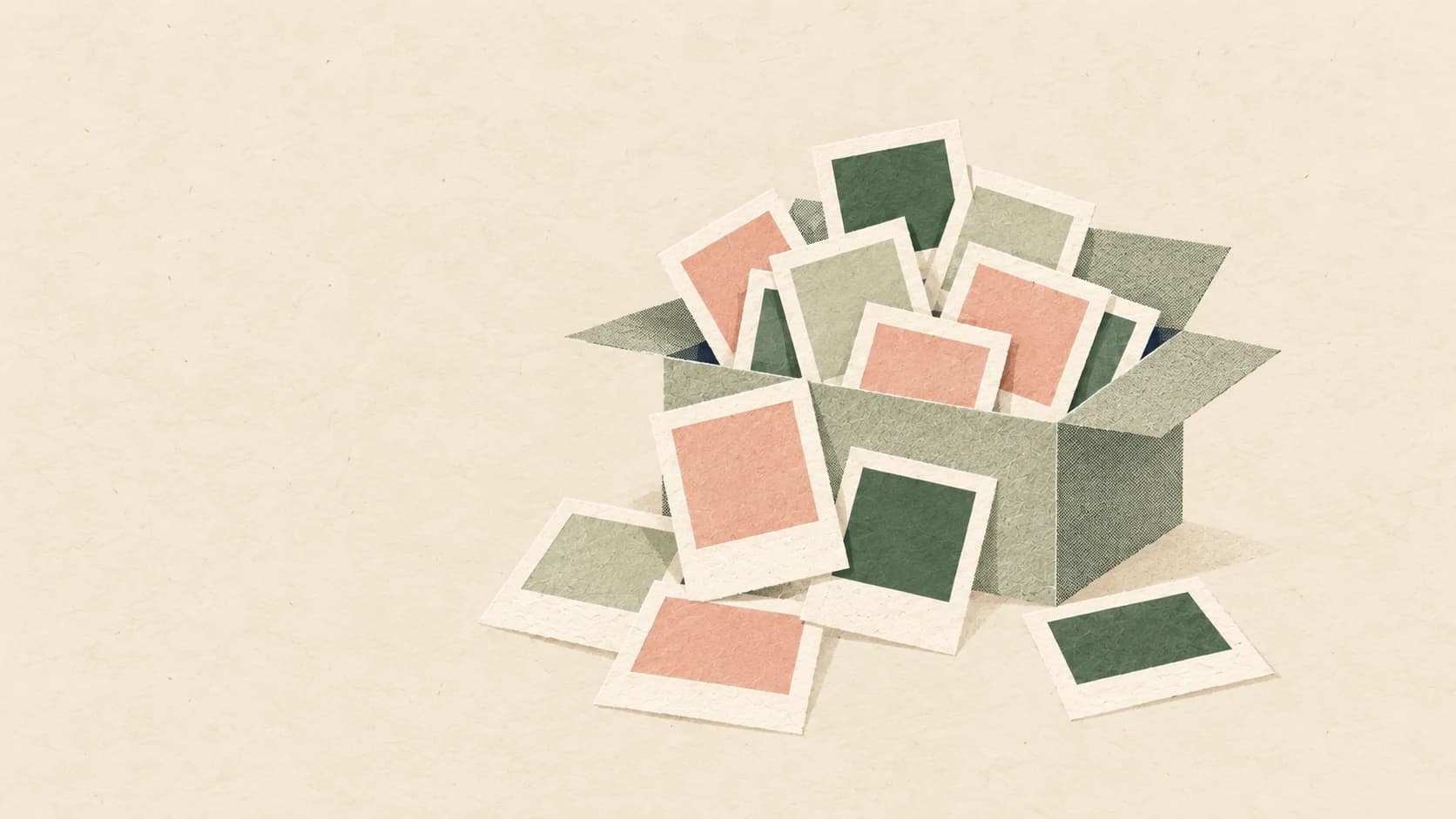
The Second the Whole Room Lifts a Phone
There is a moment that repeats at every event. The couple steps toward the chuppah, the light softens, and something in the room shifts. Then, almost in unison, a forest of hands with phones goes up. Everyone wants to catch the moment, and without meaning to, everyone also slightly blocks it, for each other and for themselves.
We have all been there, on both sides. Once as the person shooting over heads, once as the person trying to see the real moment through a layer of glowing screens. It is a good place to stop and ask a simple question almost nobody asks in the middle of the joy: where do all these photos actually go.
We Do Not Shoot to Remember, We Shoot So We Will Not Miss Out
The obvious assumption is that we photograph in order to remember. But if that were true, one good shot would be enough. Instead we take ten, driven by something more urgent: not missing out. The fear is not that we will forget the moment, but that it will happen and leave nothing in our hands.
This is not a criticism. It is a very human response to something beautiful that passes quickly. But it is worth noticing that this motive, do not let it get away from me, pushes us toward quantity, not quality. We do not choose the moment; we insure ourselves against it. And insurance means accumulation.
What Happens When We Trust the Camera to Remember for Us
There is a less discussed side too. Memory research points to something sometimes called photographic offloading: when we know a device is saving something for us, our brain invests less in remembering it itself. In other words, the act of photographing can make us slightly less present in the very moment we wanted to preserve.
No need to turn this into a drama. A good photo is a genuine gift, and nobody has to put the phone away entirely. But there is a difference between capturing one moment and then returning to it with your eyes, versus filming the whole evening through the screen. The first adds to memory. The second sometimes replaces it.
Volume Is Not the Solution, It Is the Problem
Say we succeeded. By the end of the night there are two hundred photos on the phone and a few hundred more in the shared group. Now ask yourself honestly: when was the last time you scrolled to the bottom of an album like that. Most people open it, see the ocean, and close it.
That is the paradox. The more we shot so as not to miss out, the more likely we are to miss all of it. Two hundred similar photos are not two hundred times the value of one right photo. They are a pile. And the pile, exactly like a WhatsApp group that filled up, turns going back to the moments into a chore nobody gets around to.
The Difference Between Documenting Everything and Keeping What Matters
Documenting and remembering sound like the same thing, but they are opposites. Documentation wants everything. Memory wants the right thing. An album that tries to hold every second of the night ends up holding none of them, because it has no hierarchy and no single frame that stops us and says this is where to stay.
The moments that survive the years are never all the photos. They are the dance with grandma. The hug by the bar. Dad's face a second before the tear. Five photos like that are worth more than two hundred of the same dance floor from the same angle. The trouble is that those five are buried inside the two hundred, and someone has to dig.
Why This Changes How We Should Think About Event Photos
The takeaway is not to shoot less. It is to change the question. Instead of how do we capture everything, ask how do we make sure each person can easily get back to their own moments. That shifts the weight from quantity to relevance, and from the shooting to what happens with it afterward.
That is exactly the point of view Matcha was built from. Not another place to pile up photos, but a way to make sure every guest receives the moments they were actually in, without digging through an ocean of everyone else's. Because in the end, what turns an evening into a memory is not how much we shot. It is how easy it was, months later, to find the one right photo and smile.